

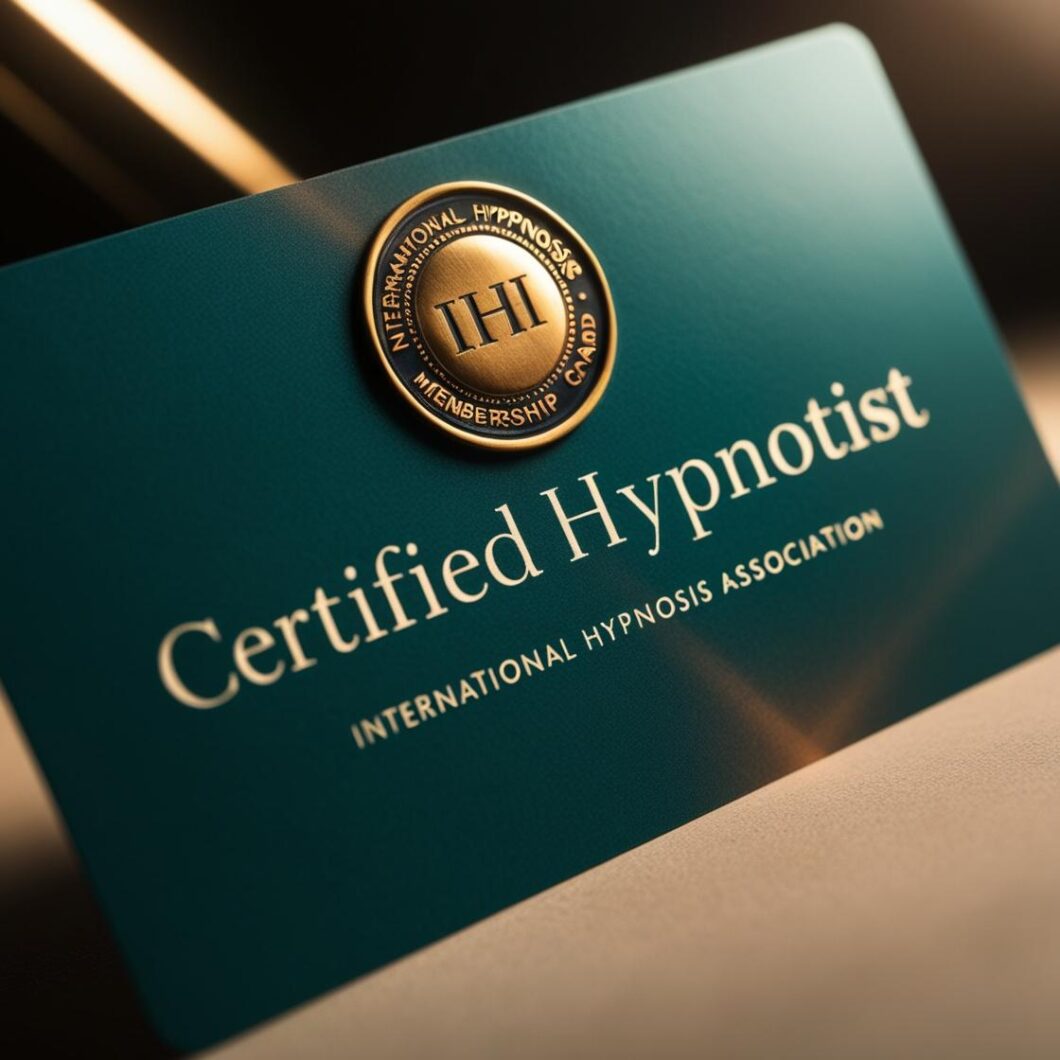
If you’re looking at hypnosis training, you’ll run into two sets of initials fast: NGH and IHA. Most schools mention one. Some mention both. Almost nobody explains the difference, which leaves prospective students trying to choose between two things they can’t tell apart. (If you’re earlier than that in the process, start with how to become a hypnotherapist.)
I hold both, and I teach toward both. Here’s the honest comparison.
The short answer
They’re not competitors in the way people assume, and you are not choosing between two versions of the same thing.
The NGH is the large, old, institutional one. It’s where the recognition lives.
The IHA is the smaller, more practice-oriented one. It’s where a particular set of business tools and NLP credentialing lives.
Holding both is common, and it isn’t redundant.
The National Guild of Hypnotists
The NGH was founded in Boston in 1951 by Dr. Rexford L. North. It’s the oldest and largest hypnotism organization in the world — roughly 20,000 members across more than 93 countries. It’s been commended twice in the Congressional Record, including a 1993 recognition for establishing a rigorous professional code of ethics.
That history is the main thing it gives you: recognition. When a nervous client Googles you before booking, “Certified through the National Guild of Hypnotists” is a phrase that has been in circulation for seventy years. They won’t know what the NGH is. They’ll know somebody checked.
What NGH membership includes:
- Eligibility to apply for professional liability insurance at member rates — which you need before you see a single client
- The Journal of Hypnotism, quarterly, and the Hypno-Gram newsletter
- The annual convention, which is the largest hypnosis gathering in the world
- A referral database and listing
- Workshop and training discounts
What it asks of you:
- Training through an NGH-approved curriculum — a minimum of two semesters’ equivalent
- 15 hours of continuing education per year to keep your certification active
The NGH issues several credentials. The main one for working practitioners is Certified Consulting Hypnotist, which has been the primary designation since 2006. Note that since 2015 the Hypnotherapist title is restricted to practitioners who already hold a health-care license — a distinction worth understanding before you print anything.
The International Hypnosis Association
The IHA is smaller and pointed at a different problem: not “how do I get recognized” but “how do I actually run this as a business.”
What IHA membership includes:
- Certification covering both hypnotherapy and NLP — worth noting, because NLP is a separate credential elsewhere
- A Find a Member directory listing and client referral system
- Authorization to use the IHA logo on your marketing
- A 30-minute annual consultation with an expert — case review or business guidance, your choice
- Practical business tools, including a budget calculator and a website evaluator
- A set of complimentary training programs on ethics, phobia work, client acquisition, and session recording
That consultation is the part I’d point at. When you’re two months into practice and a session goes somewhere you didn’t expect, having someone to call is worth more than another certificate.
So which one?
The question I’d actually ask is different: what do you need this credential to do for you?
If you’re building a local private practice and clients will find you through Google and word of mouth — lead with the NGH. Recognition is the currency, and it’s the one your clients have heard of.
If you want the NLP credential alongside your hypnosis certification without pursuing it separately, the IHA covers both.
If you’re newly certified and worried about the business side — which is where most new hypnotists actually come unstuck — the IHA’s tools and annual consultation are pointed squarely at that gap.
If you’re planning to teach eventually, you’ll want the NGH. Instructor pathways run through it.
Why many of us hold both
The costs are modest relative to what a practice earns — see the full cost breakdown — and the overlap is smaller than it looks. The NGH gives you the recognized name, the insurance route, the convention, and the professional community. The IHA gives you NLP credentialing, the referral directory, and business support.
You are not paying twice for the same thing. You’re paying for credibility and for infrastructure, and those are genuinely different purchases.
What neither of them is
Worth saying clearly, because it trips people up.
Neither is a license. In most US states there is no licensing body for hypnotherapy — no state board, no supervised hours. Certification is a professional credential, not a legal permission. It doesn’t authorize you to diagnose, treat, or prescribe, and NGH members explicitly do not do those things.
You are a hypnotist. Unless you’re separately licensed, you are not a psychotherapist, a physician, or a counselor, and your website and conversations must never imply otherwise. When a client presents with a diagnosed medical or mental-health condition, you work alongside their provider, with a referral, or you refer them on.
That boundary isn’t a limitation on your practice. It’s what makes it a profession.
What actually matters more than the letters
Here’s the thing nobody selling certification wants to say: the credential is not what makes you good.
What makes you good is how many times you’ve hypnotized a real person while someone experienced watched and told you what you missed. A certificate from either organization is evidence you completed an approved course. It says nothing about whether you can handle an abreaction, or recognize that the problem the client described isn’t the problem they have.
So when you’re comparing schools — and both organizations approve many — ask the question that actually predicts competence:
Will I leave this training with the confidence and skill to start my own practice?
The course and the instructor matter. Apprenticeship matters. The answer to that will tell you more than any set of initials.
Kristin Shelly is a Certified Hypnotist and Certified Instructor through the National Guild of Hypnotists and the International Hypnosis Association, practicing in Asheville, North Carolina.